+03 3318 3729

Friday, 5 February 2016

The new JJC JM-F(II) RF Wireless Remote Control for Sony A99 , A77 , A57 Camera DSLR , One Years warranty , Product visit : http://famcart.com.my/JJC-JM-F-ii-RF-Wireless-Remote-Control-sony.html

JJC JM-II Radio Frequency Wireless Shutter is designed for cameras that has a remote shutter socket. The system works at a 433MHZ frequency and has 16 available channels. In addition, this wireless remote system adopts a technology to allow the transmitter trigger the receiver without direct line of sight up to 30 meters. The JM-JM-II receiver simply connected to the camera's remote socket by the supplied JJC receiver cable. JM-II transmitter can trigger the camera shutter at five modes: single shot, 5 seconds delay shot, 3 continuous shots, unlimited continuous shots and bulb shot. The receiver has a 1/4"-20 tripod mount socket on the bottom, so you can even mount the receiver onto a tripod. Most important, our JM-II transmitter is able to fire multiple receivers at the same time. The receiver itself with the connecting cable can be used as a Wired Remote Switch, then half press to focus, full press to take a photo.
 
1) Frequency
16 Possible Radio Channels over 433MHz
 
2) Multi-function
Trigger your camera wireless or wired. 
Wireless function supports five modes: single shot, 5 seconds delay shot, 3 continuous shots, unlimited continuous shots and bulb shot. 
Wired triggering allows you half press to focus, fully press to take photo, and wired triggering works even if the receiver battery is dead or missing.
 
3)Dual-Function Release
Press the transmitter's button half way to focus; press it fully to trigger the shutter.
 
4) Delayed Release
The delay function gives you extra time to get into position.
 
5) Long Exposures
With the JM-II you can control the length of the exposure remotely.
 
6) LED Indicators
Two LED indicators confirm pre-focus and exposure when in the wireless mode.
 
Specifications


model
JM-F (II) 
Gross weight
88g
material
ABS
guarantee
One year warranty
Kmpatibel with the following cameras


SONY


A77II
A99
A57
A35
A37
A100
A200
A300
A350
A450
A500
A550
A560
A580
A700
A850
A900
A33
A55
A65
A77


Related search 
JJC Product for camera
buy jjc in malaysia 
Buy camera in Malaysia 
Buy JJC In Malaysia 
Malaysia JJC Distributor . 

Monday, 1 February 2016

JJC Cable-SPY1 is designed for cellphones that has a 3.5mm TRRS jack(CTIA Standard).
 
It converts your cellphone’s 3.5mm TRRS jack to 3.5mm Mic Jack & 3.5mm Monitor Jack, one allows you connect a microphone such as JJC SGM-38 or other similar microphones. Another one allows you connect a headphone. In this way, you can use your cellphone to create more wonderful audios and videos.  
 
Specification: CTIA standard terminal
 
Compatible with:
iPhone 4s 5 5s 6 
SAMSUNG cellphones


Related Search 
Buy JJC product in Malaysia 
DJI Osmo audio record cable 
Phone become zoome recorder 
Mobile record professional sound 

JJC MCH Series Memory Card Holders features several individual slots to store your memory cards, which prevents your memory cards from dust and loss. Made of ABS, the holder is lightweight and portable. With compact design, the holder is credit card size. In addition, a hole is provided so you can attach the holder to your keychain. The holder keeps the card securely while allows you to store and remove it with your finger easily. There are memory card patterns on the back of the holder, ensuring that the memory cards are inserted rightly. What’s more, the patterns can be marked and noted in case that you mix your memory cards.

Product Highlights
Several individual slots to store memory cards
Prevents memory cards from dust and loss
Credit card size, lightweight and portable
With memory card patterns on the back for ease of use and can be marked
A keychain hole is designed for easy carrying
Memory cards can be inserted easily and rightly

Specifications
WeightNet  Weightg 10g
Gross Weightg 12.5g
Full Size 85*54*2.8mm
SizePackagePackaging type Plastic bag
Packing size 119*111*2.9mm
Material ABS

Related search 
Good memory card case design in world 
good memory card case in pocket 
Pocket design case in market 
Buy jjc product in Malaysia 


Malaysia Distributor JJC 


The Proocam PRO-F200 Steel Aluminium Big Universal Adapter Mount for Gopro Camera , available in www.famcart.com.my , special design for gopro for some part and solid material , screw and plug in and go for Gopro camera.

Proocam PRO-F200 Adapter Mount is a universal mount designed to lock your GoPro™ camera securely to whatever you'd like. This is the same secure GoPro™ attachment system that our handlebar and saddle rail mounts use. Screw, bolt, or rivet…you've got a rock solid mount to attach your GoPro™ camera. Buy 3 or 4 and turn your car, skis, motor, kiteboard, sled, etc. into the ultimate video rocket ship. 
 
This is an elite level cycling camera mount by the makers of the K-EDGE Chain Catcher, chosen by the world's best cyclists to ensure success in the Tour de France or your next ride. Go big or go home…but don't go without a bomb-proof K-EDGE GO BIG Mount for your GoPro™ camera! 
 
Specifications: 
Made in the China. CNC Machined 6061 T6 Aluminum 
Weight – 11 grams, super light, super strong 
Low profile design minimizes camera shake and mounts low and stable for best sports performance 
Compatibility – hole spacing 1”, countersunk for M4 flat head socket screw, M5 bolt for camera attachment included, works with GoPro HERO Original, HERO2, Hero3 and the new HERO3+ Cameras. Garmin VIRB Compatible when using the adapter supplied with the VIRB. 


Related Search 
Proocam PRO-F200 Steel aluminium Material gopro accessories
Buy gopro in malaysia 
Buy gopro low price in Malaysia 
The new JJC LH-68 Lens Hood available in www.famcart.com.my now , fit for Canon 50mm F1.8 STM camera lens  , more detail for the product

JJC LH-68 Lens Hood is dedicated to the Canon EF 50mm f/1.8 STM lens and helps prevent unwanted stray light from entering the lens by extending and shading the end of the lens. It has a non-glare matte finish on the inside to further prevent or limit lens flare. There is no vignetting with the hood on. The hood can also be placed backwards over the lens for a more compact storage solution. The hood allows you to put on a filter and a lens cap, too. In addition, since the end of the lens is extended, you also get the added benefit of some extra protection from accidental impact. JJC LH-68 lens hood replaces Canon ES-68. 

Product Highlights 
Blocks stray light from entering the lens 
Reversible for easy storage 
Will not affect the use of lens cap or filter 
Non-glare matte finish prevents reflections 
No vignetting will be caused with the hood on 
Extra protection from accidental impact 

Compatible with 
CANON EF 50mm f/1.8 STM Lens 

Package: 
Lens Hood x1 


High quality Lens hood for Canon 50mm F1.8 STM lens  

related search : 
Buy a good lens hood in online
buy low price lens hood 
buy a low price canon 50mm f1.8 stm 

Saturday, 30 January 2016

filmdigital
There have been a few film versus digital articles here and there on the interwebs, but seems like very few have approached the subject in a scientific fashion or with the advice of both film and digital experts.
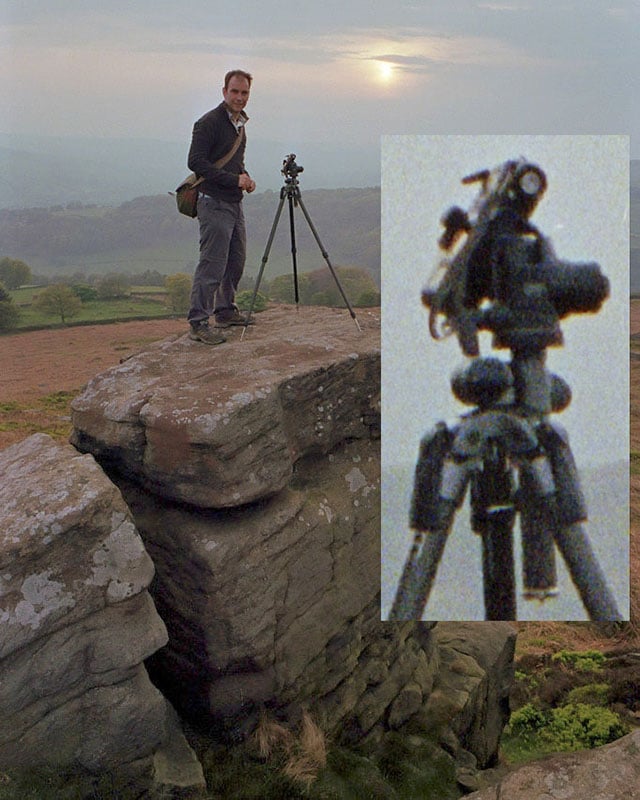
However, with the help of Joe Cornish (a landscape photographer who made his living shooting on medium and large format but now shoots Phase One IQ280s), Chris Ireland (who sells Phase One cameras), and myself, Tim Parkin, (I shoot film and run a drum scanning service), a definitive test was born.

The first part of the test compared large/medium format film with medium format digital, and a subsequent part was a comparison of high end DSLRs using the Nikon D800E.
The results may surprise a few people.
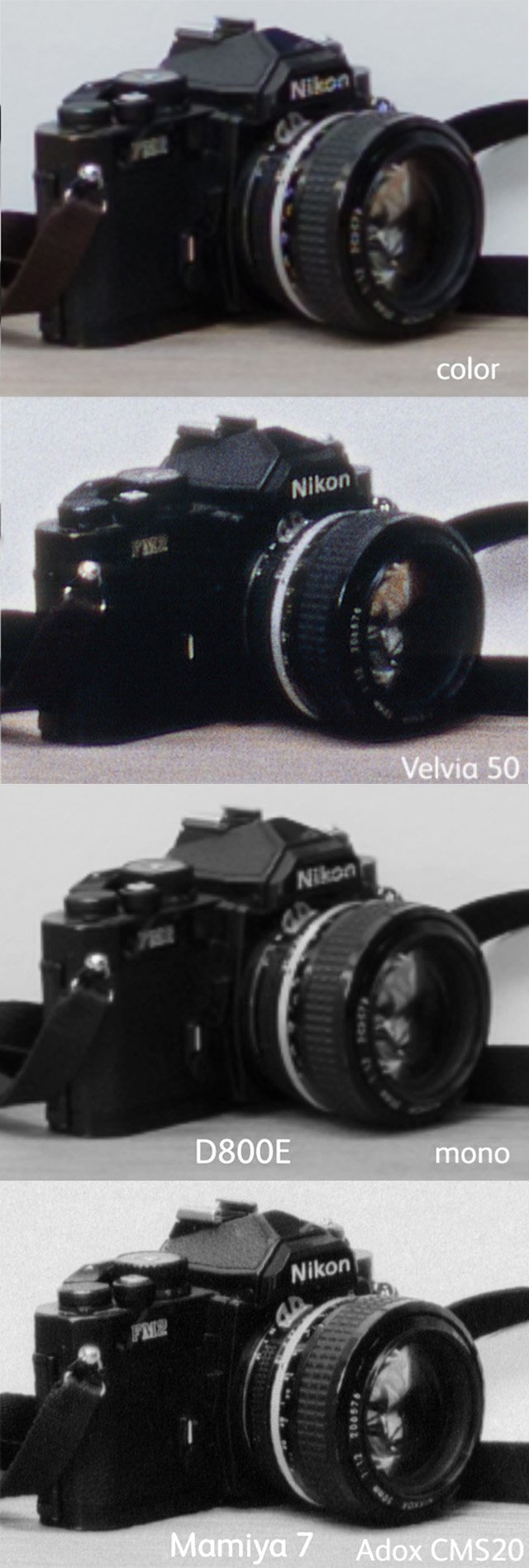
Here’s our comparison of the Nikon D800E and a Mamiya 7 medium format camera (both using ~25mm equivalent lenses):
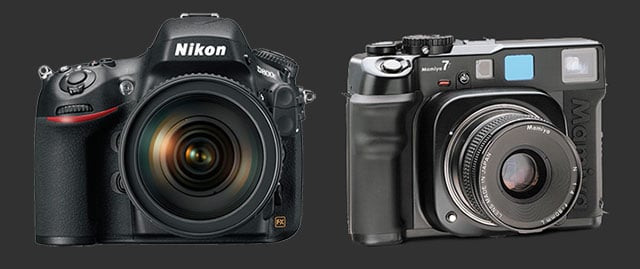
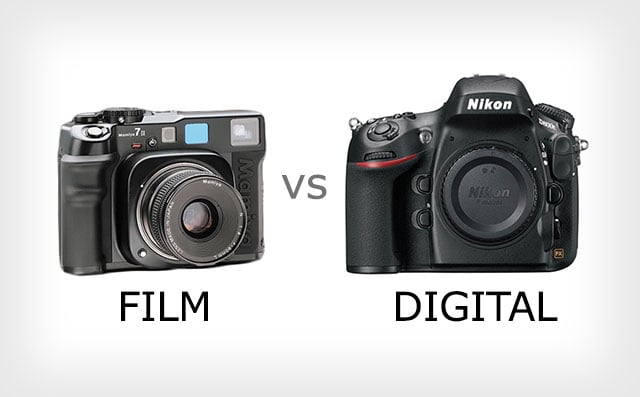
Nikon D800E DSLR (left) and Mamiya medium format rangefinder (right)
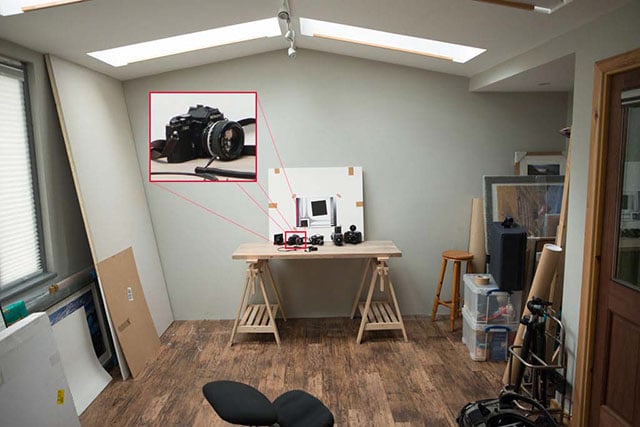
First of all here’s the full photo view showing the cropped area we’ll be looking at:
8
And here are the comparisons in color (Fuji Velvia 100F) and black and white (Adox CMS 20) film:
D800E-vs-Mamiya7-including-colour copy
We were that impressed with the performance of the Mamiya against the D800E in terms of resolution that we thought we’d try comparing with the IQ180.
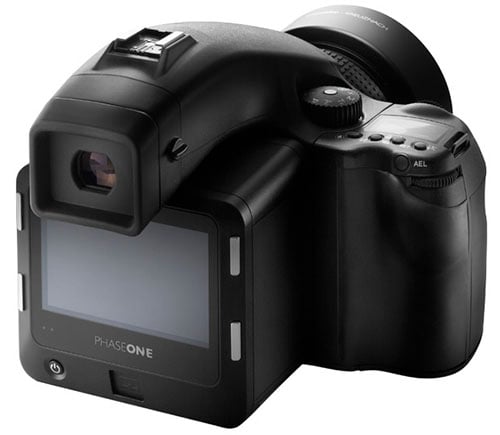
The Phase One 180 packs an 80-megapixel sensor.
The Phase One IQ180 packs an 80-megapixel sensor.
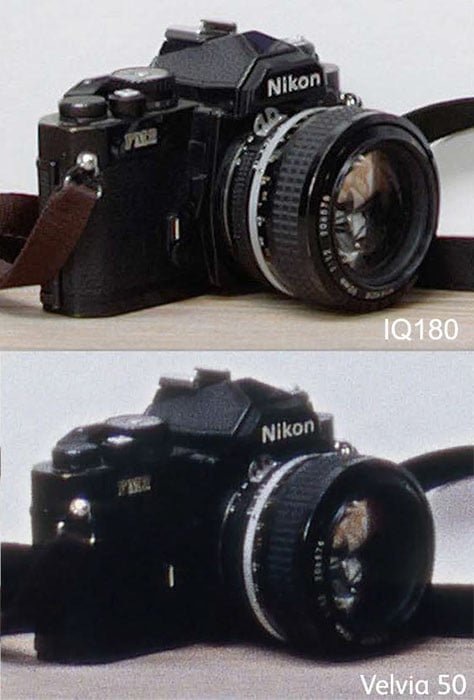
Firstly the color comparison:
10

Okay… Even though if you look closely at the way the Mamiya 7 resolves the text it looks comparable, the overall impression is that the IQ180 has the sharper, cleaner image. This is due to the fact that high resolution details in film get lower contrast, whereas on digital, everything resolved appears at a fairly high contrast.
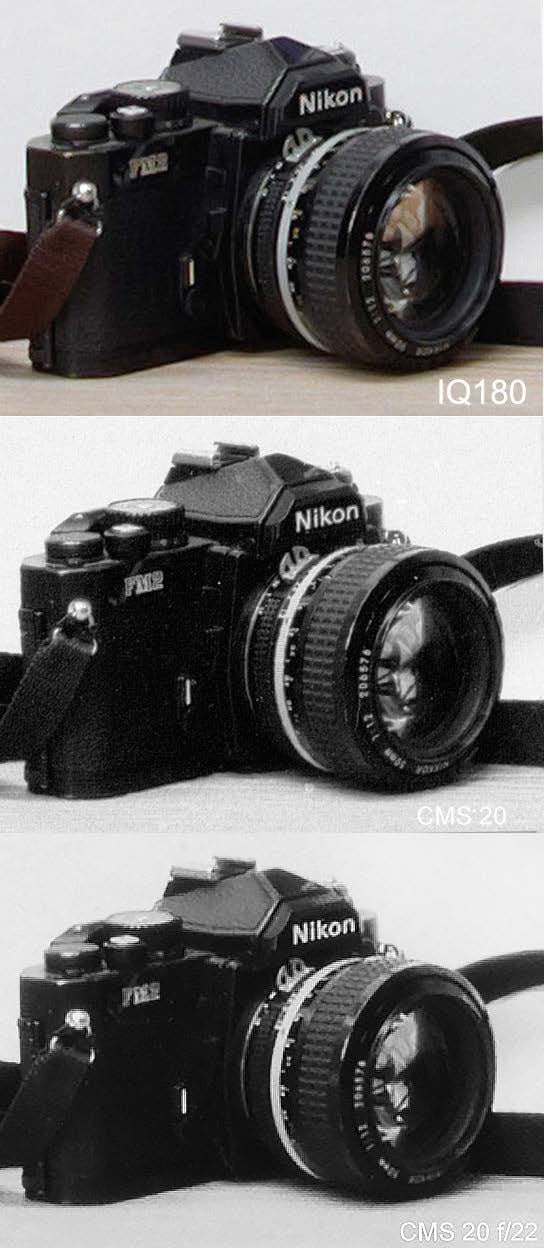
Let’s look at the black and white results. The first image is the IQ180 and the second is the Mamiya 7 at f/8 (ignore the third for now):
11

Wow! Now the film used is Adox CMS 20, a high resolution film capable of resolving 800 line pairs per mm. In real world tests (by Henning Serger) this film on a Mamiya 645 with the 80mm Sekor has resolved 210 line pairs per mm which is greater than 24,000px across the film height!
In other words, this is a potential 400 megapixel result, but when scanned a lot of this is lost and you get about 50 to 80 megapixels. It’s still very impressive though! The results from our Mamiya 7 suggest about 150MP. Projected (as a black and white positive) or enlarged and you’ll get a lot more.
You might be wondering what the third frame was in the above image. Well, it’s the Mamiya 7 at f/22! This goes to show just how good old lenses actually are (especially the Mamiya rangefinder ones) and on a sideline proves that f/22 isn’t the hellhole that many photographers believe it is (for more about that refer to Roger Cicala’s article about diffraction).

What About Large Format?

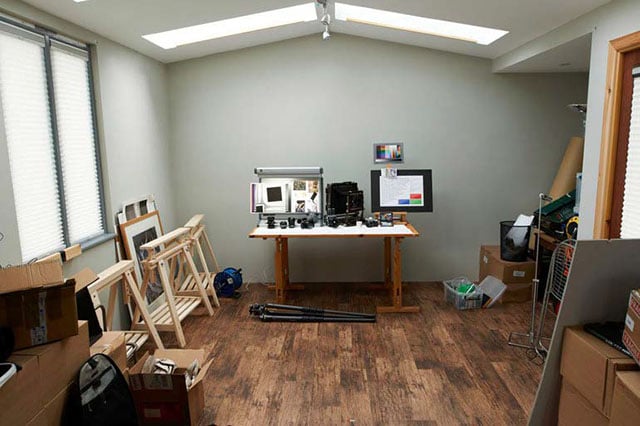
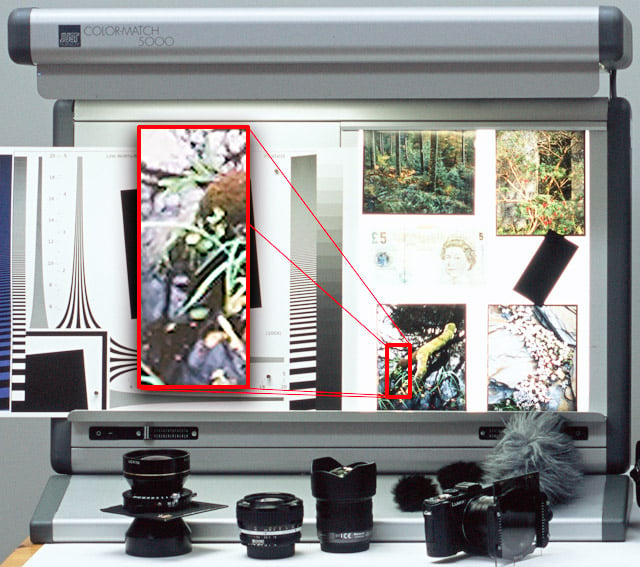
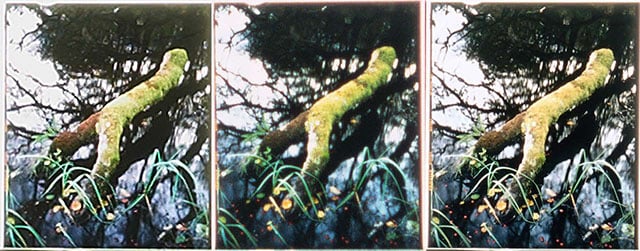
Here are a couple of comparisons between 4×5, 10×8 and the Phase One IQ180. This first is a section from a transparency that was placed on a lightbox (see the studio overview shots above – it’s the bottom left transparency). Here’s the full transparency and then a section from the left hand fork of the branch. Here’s the whole view for reference:
12
…and a sample showing just the part of the table of interest. We’ll be comparing results from the red area.
05 studio-close-areas
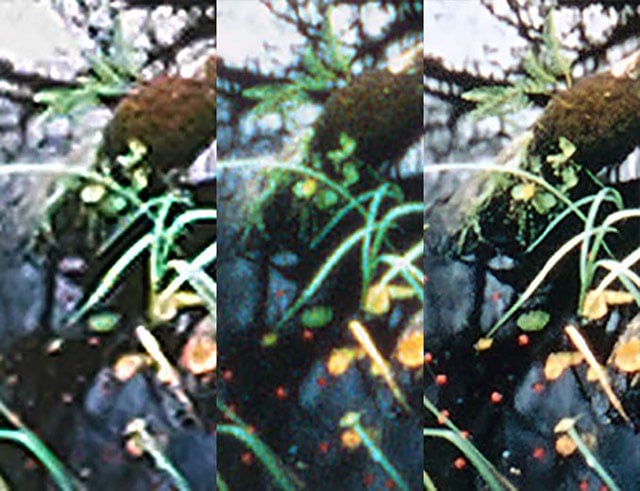
And here’s the final comparison. From left to right this is the IQ180, 4×5 Velvia and 8×10 Velvia:
14
4×5 shows better performance than the IQ180 and the 10×8 just blows everything out of the water.
15
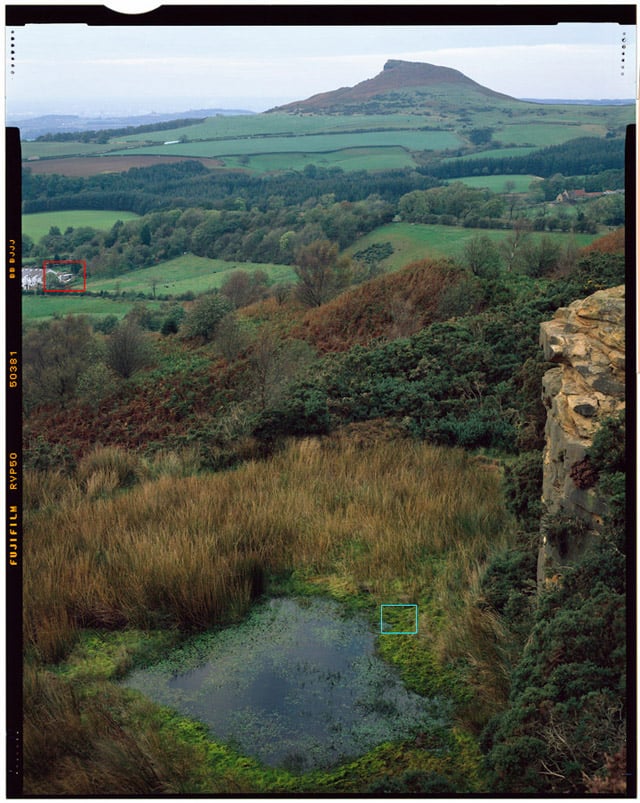
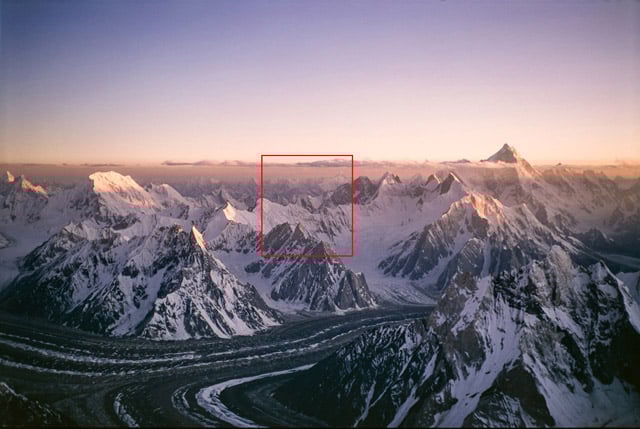
Finally, here’s the real world landscape photograph that we took on a windy day in Yorkshire (that happens a lot!). We’ll be showing a comparison of 4×5 and the IQ180 for the area marked in red on the left hand side of the picture:
07 real-world-topping-showing-areas
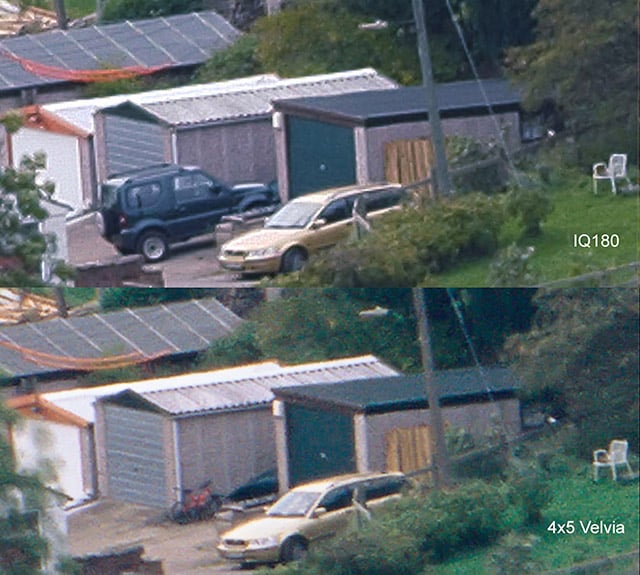
Here’s a comparison between the IQ180 and 4×5 Velvia 50.
08 topping-housesleft-640-iq180-vs-4x5
As you can see it’s a close call. Some things look more refined on the 4×5 Velvia (the garden chair, the car grille) and some things look a lot clearer on the IQ180 (the garage roof and walls). In a print of this section things were ranked pretty closely.
Why are the results from 4×5 not performing as well as indicated by the studio comparison? Well in the real world we had to stop down from our optimum aperture of f/11⅔ to about f/22. This reduced the max resolution of the 4×5 shots. The IQ180 needed stopping down too but that just reduced the contrast at the sensors maximum resolution and with a bit of sharpening it didn’t really do much damage.

What About Color Rendition?

One of the interesting things that cropped up was the way that the digital sensors deal with color in terms of tonality and resolution. Because only one in four pixels are blue or red, quite often color resolution is reduced in comparison with luminosity resolution. These look fine at small enlargements but when images are shown larger these artifacts can show through.
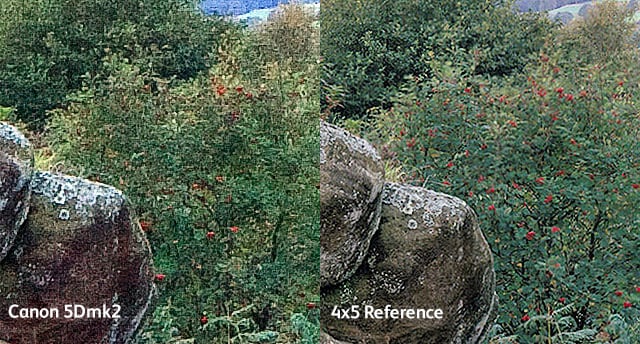
Here’s a great example of the problems with having only a few red pixels from an outing a few years ago, comparing a Canon 5D Mark II with 4×5 Velvia. Obviously the 4×5 Velvia has more resolution but we downsampled it to match the 5D Mark II and got the following result (show at 200%)
09 berries
On the right (the 4×5 image downscaled) we can see all of the berries on the tree but on the left (the Canon 5D Mark II image) a lot of the berries have disappeared. The only berries shown are where there were larger groups of them (i.e. a single pixel size berry is unlikely to match up with a single red pixel whereas a group of berries covering 2×2 sensor pixels will definitely hit a red filtered one).
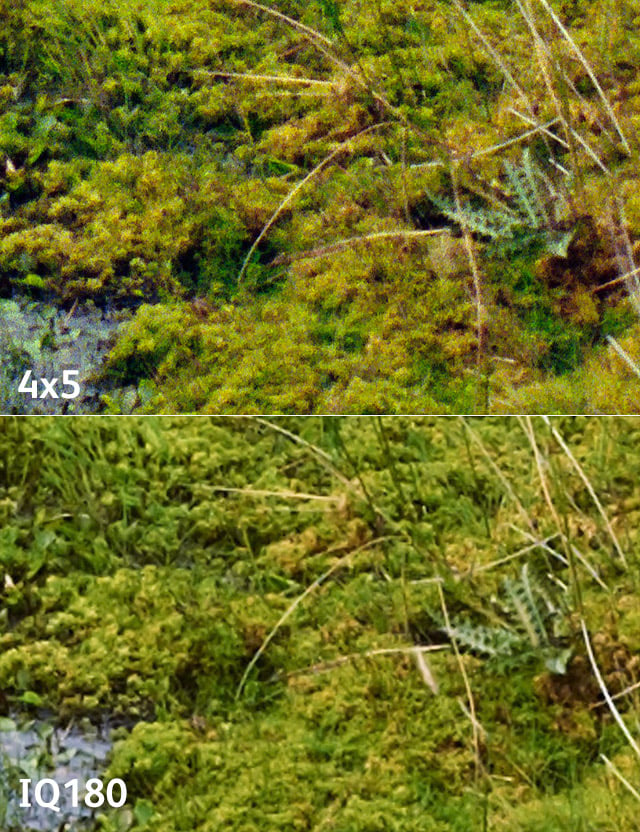
Also film still seems to differentiate color differently to digital (depending on the camera). Here’s a sample of our test image from the cyan boxed area at the bottom next to the pond.
10 topping-moss-iq180-vs-4x5Portra400
On top we have a 4×5 Portra 400 scan and on the bottom the IQ180. The 4×5 Portra 400 version has much more color definition.

So What About 35mm Film?

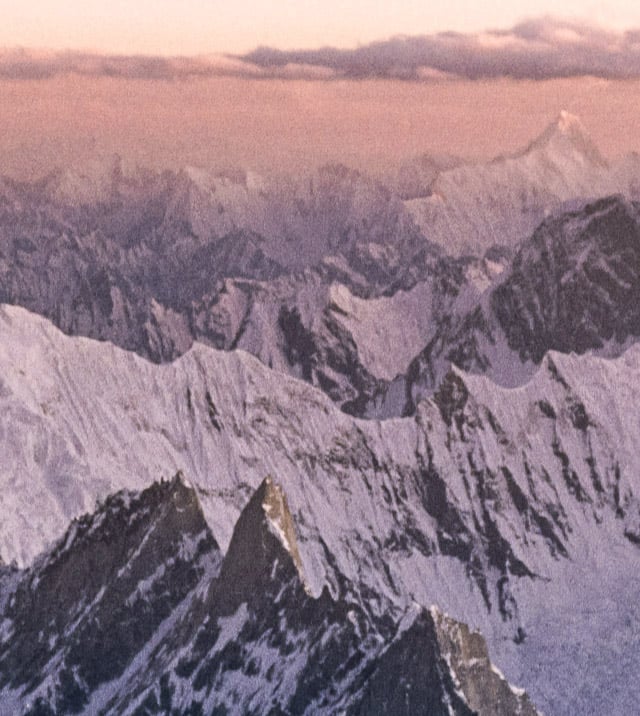
We didn’t include 35mm film in the test – it was originally aimed at comparing 10×8 film with the IQ180. However, I had a recent scanning job for a colleague of mine who has taken 35mm film cameras to some of the highest mountains in the world (Alan Hinkes – the UKs first mountaineer to climb all of the world’s 8000m peaks) and he has allowed me to show a photograph here including 100% crops. These photographs were taken using a Ricoh GR1 on Fuji transparency film. We’ve enlarged this to 15″ x 30″ recently.
11 hinkes-4
Here’s a 100% of the scan at 6000DPI:
12 hinkes-4-crop100
The results are very impressive and from our comparisons we think scanned color slide film has a digital equivalent resolution of between 12MP and 24MP depending on what aspect you look at (12MP for overall sharpness appearance, 14-16MP for luminosity resolution, and 24MP for color resolution). These figures are estimates based on a good Imacon or Drum scan and would be even higher for projected or enlarged images.
And here’s a final one showing the dynamic range of Portra 400 on a 35mm camera. In this case an Olympus OM10 that I bought on ebay for around $30. The dynamic range in this scene was measure as 15 stops and there are no areas that are blocked up or blown out.
tim

Conclusion

Film still has a lot to offer, especially with the price of very high quality cameras so low. Using high resolution black and white film is well documented these days (although you have to process them yourself) and the latest version of slide and negative color film are stunning. Portra has been reformulated for scanning and has immense dynamic range and Fuji Provia is one of the highest resolving slide films ever made.
As for scanning, film scanners can be had for reasonable prices, even drum scanners! And finally medium format drum scans can be had from $20. My conclusion? It’s a great time to be using film AND digital!

P.S. If you want to see some more information about our film versus digital tests, please visit this page.

About the author: Tim Parkin is the editor of a dedicated landscape photography magazine On Landscape and also the CEO of a drum scanning business. Whilst not in front of a computer writing and post processing he can be found in the Yorkshire Moors with his 4×5 or 10×8 view camera and A7R.

Monday, 18 January 2016

IMG_1747-copy-1
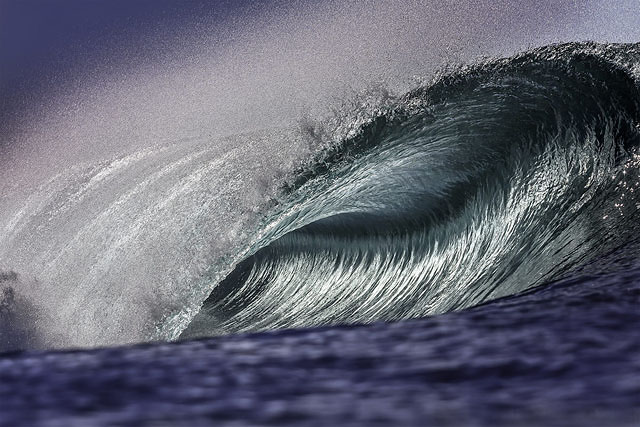
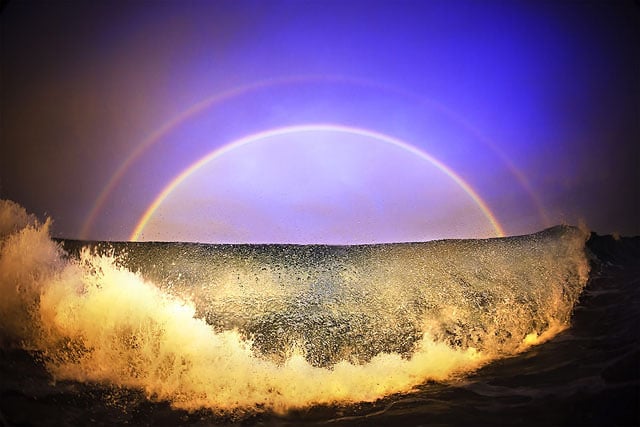
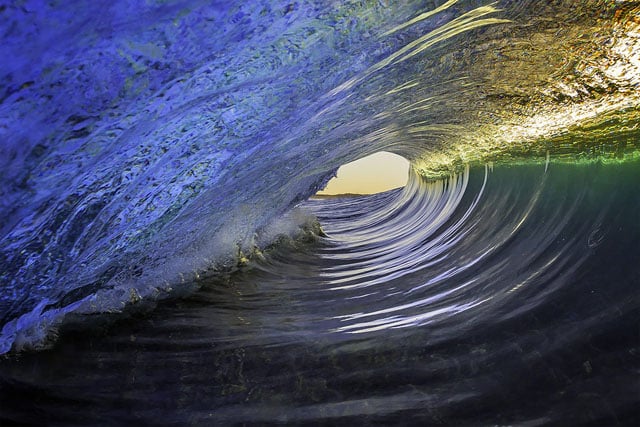
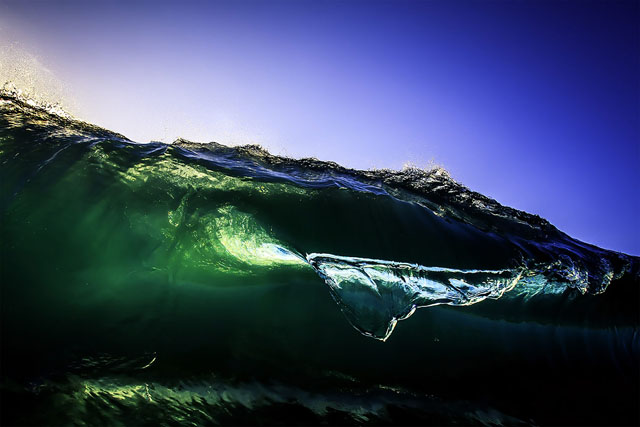
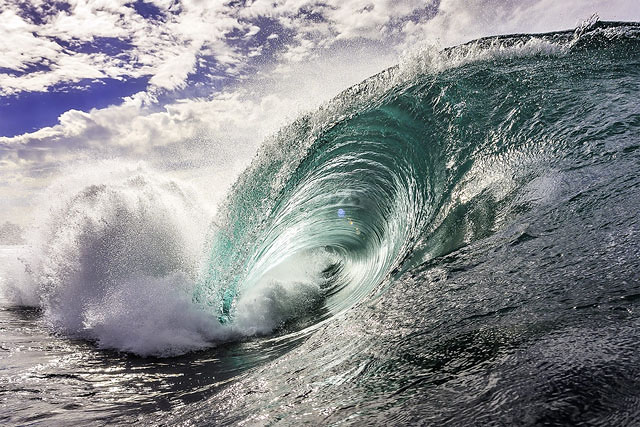
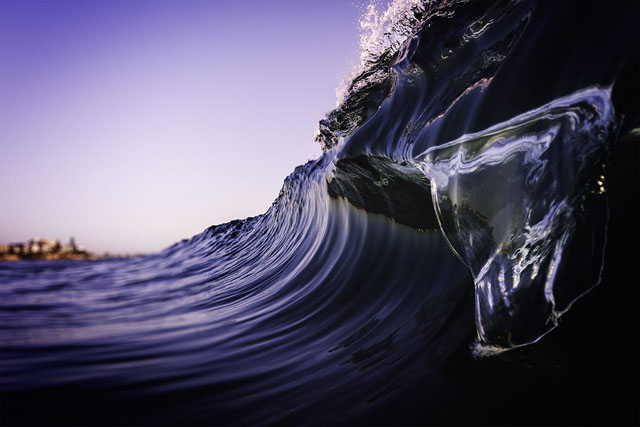
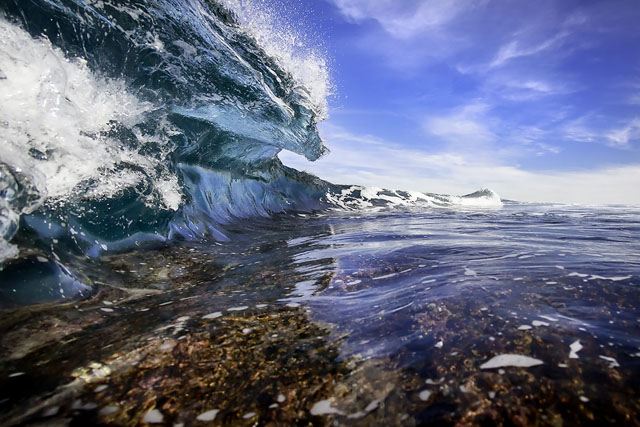
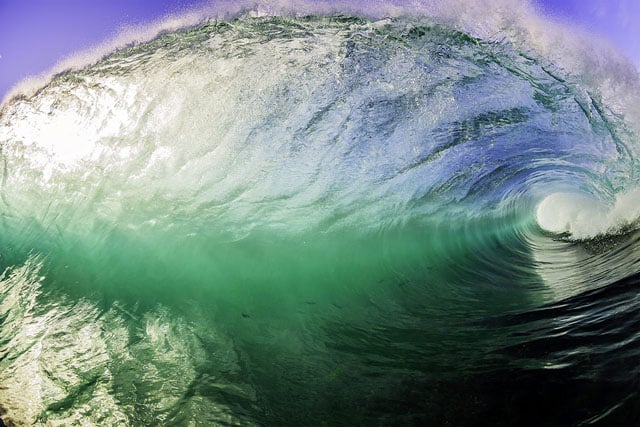
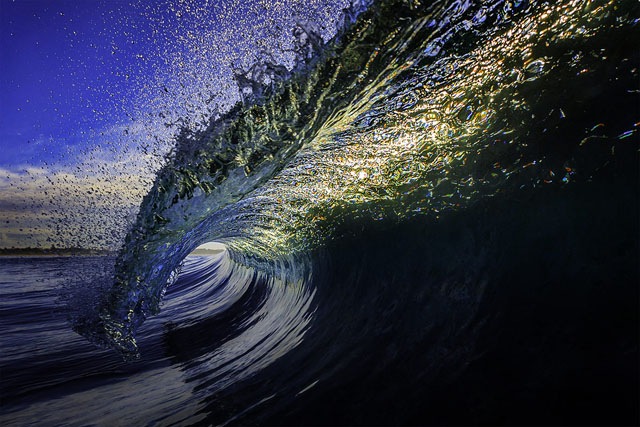
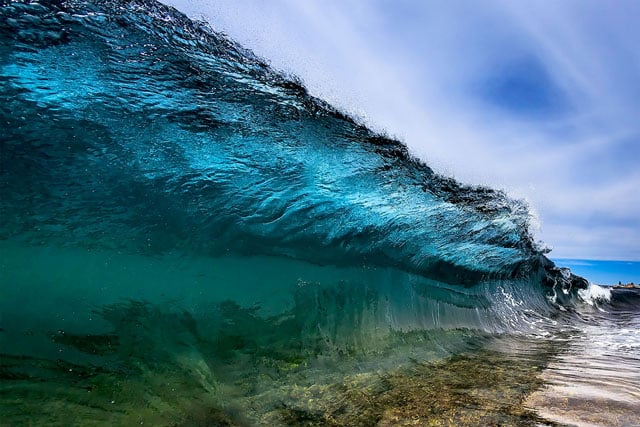
Chris Dixon is a 25-year-old photographer based in Sydney, Australia. When he’s not photographing weddings, he’s often standing in shallow ocean water and shooting fine art photos of waves breaking on the coastline.

To shoot the images, Dixon positions himself on shallow, rocky reef ledges that are covered in barnacles. When waves break onto the near-dry reef, he tries to capture their beauty and form through close-up compositions.
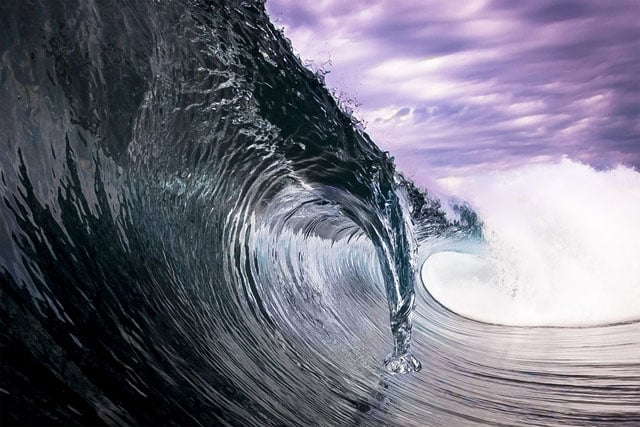
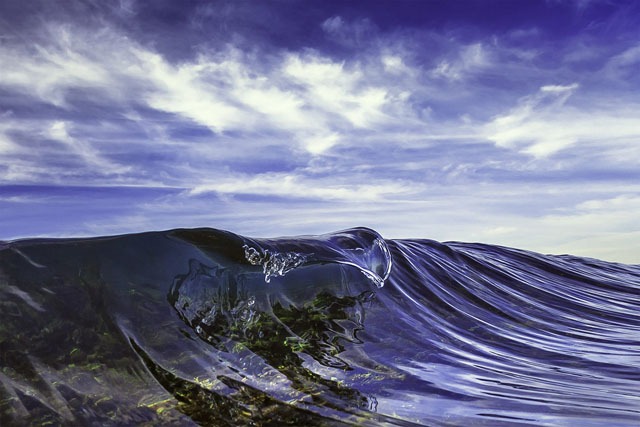
In some of Dixon’s photos, the waves look like peaceful glass sculptures with smooth surfaces and strange forms. In others, the waves appear to be exploding into a cloud of water droplets.
These photos are the result of 10+ years of swimming and photographing the dynamic moods of the ocean:
IMG_0154-copy-1
IMG_0255-copy-1
0J5A5009-copy
0J5A9544-copy
IMG_0242-copy-1
IMG_0288-copy-1
0J5A2441-2
IMG_0201-copy-1
IMG_0069-copy
Exhale
0J5A0852-copy-1
IMG_0051-copy
0J5A9536-copy-6
You can find more of Dixon’s beautiful ocean photos through his website, where there’s a dedicated gallery, and on Instagram. He also sells his images as wall art through his site.

Image credits: Photographs by Chris Dixon and used with permission

Popular Posts

Facebook Like

Follow Us

Stay Connect :


Fujitsu Battery